

For nearly five decades, Saturday Night Live—better known simply as SNL—has been a cornerstone of American television and pop culture. What started as an experimental late-night comedy show in the 1970s has evolved into a long-running institution that reflects politics, celebrity culture, social change, and humor in real time. Few shows can claim the same level of longevity, influence, and relevance, and even fewer manage to reinvent themselves generation after generation.
At its core, SNL is more than a sketch comedy program. It is a mirror of the times, a launching pad for comedic legends, and a weekly ritual for millions of viewers. Whether you watch it live, catch highlights later, or simply follow the viral sketches online, SNL continues to shape how comedy is written, performed, and consumed.
In this article, we’ll explore the origins of Saturday Night Live, its iconic format, legendary cast members, political and cultural impact, evolution in the digital era, and why it still matters today.
The Origins and Early Vision of Saturday Night Live
Saturday Night Live premiered in 1975 during a period when late-night television was dominated by talk shows and reruns. NBC wanted something fresh, edgy, and unpredictable, especially for younger audiences. Enter Lorne Michaels, the creative force behind SNL, who envisioned a live sketch comedy show that would feel spontaneous, topical, and slightly dangerous. The live aspect was crucial—it meant mistakes could happen, and that sense of risk made the show exciting.
The original cast, often referred to as the “Not Ready for Prime Time Players,” included names like John Belushi, Dan Aykroyd, Gilda Radner, Chevy Chase, and Jane Curtin. These performers weren’t polished sitcom stars; they were raw, sharp, and willing to push boundaries. Their humor felt rebellious compared to traditional TV comedy, and that energy helped SNL stand out almost immediately.
From the beginning, SNL positioned itself as a show that reacted to the week’s events. Politics, news stories, and cultural trends were quickly turned into sketches, sometimes only hours after they happened. This immediacy gave the show a unique edge and established a formula that still defines Saturday Night Live today.
The Iconic Format That Defines Saturday Night Live
One of the reasons Saturday Night Live has endured for so long is its instantly recognizable format. Each episode follows a familiar structure: a cold open sketch (often political), the famous opening credits, a monologue by the host, a series of live and pre-recorded sketches, musical performances, and a closing goodnights segment. This structure provides consistency while still allowing endless creative variation.
The cold open, in particular, has become one of the most talked-about elements of SNL. These sketches usually focus on politics or major news events and often end with explained, “Live from New York, it’s Saturday Night!” This line has become iconic, signaling the start of the show and reminding viewers that what they’re watching is happening in real time.
Musical guests also play a major role in the SNL experience. Over the years, the show has hosted performances from emerging artists and global superstars alike. For many musicians, appearing on Saturday Night Live is a career milestone, offering massive exposure and cultural validation.
Legendary Cast Members and Career Launchpads
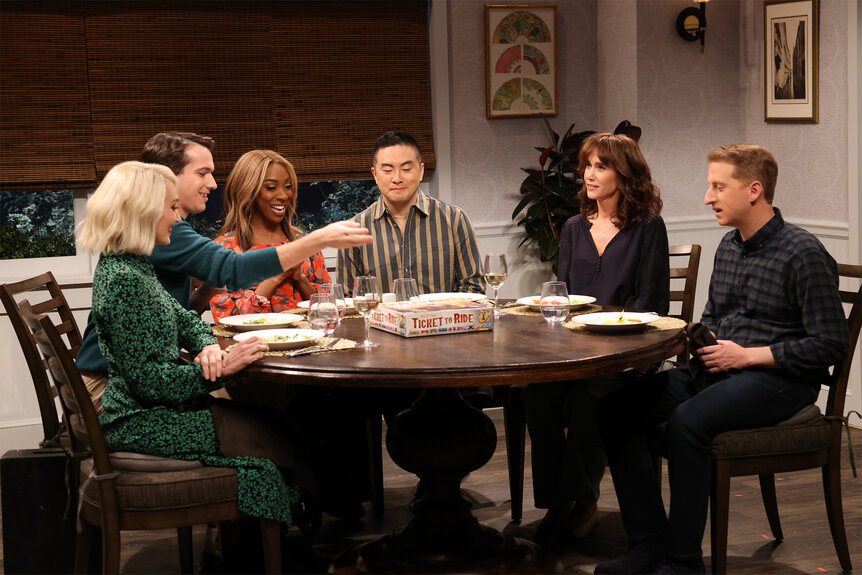
Saturday Night Live has an unmatched reputation for discovering and launching comedic talent. Many of today’s biggest stars got their start on the SNL stage, honing their skills in front of a live audience every week. Alumni include Eddie Murphy, Bill Murray, Tina Fey, Amy Poehler, Will Ferrell, Adam Sandler, Kristen Wiig, and countless others.
What makes SNL such a powerful career incubator is its demanding environment. Cast members are writers, performers, and collaborators all at once. They often work long hours under intense pressure, creating sketches from scratch in just a few days. This process forces comedians to sharpen their instincts and develop a strong comedic voice quickly.
Not every cast member becomes a household name, but even those who don’t often go on to successful careers in writing, producing, or stand-up comedy. Being part of Saturday Night Live carries a certain credibility in the entertainment industry, signaling that a performer can handle pressure, think creatively, and connect with audiences.
Political Satire and Cultural Commentary
Political satire has always been a major part of Saturday Night Live’s identity. From early impressions of presidents and politicians to modern viral sketches, SNL has played a significant role in shaping how the public views political figures. Characters like Chevy Chase’s Gerald Ford, Dana Carvey’s George H. W. Bush, Tina Fey’s Sarah Palin, and Alec Baldwin’s Donald Trump became cultural touchstones.
These sketches often go beyond simple jokes. They highlight contradictions, exaggerate personality traits, and sometimes influence public perception in meaningful ways. While SNL is not a news show, its satire can make complex political situations more accessible, especially for younger viewers who may not follow traditional news closely.
Beyond politics, SNL frequently tackles social issues, pop culture trends, and media habits. Sketches about technology, social media, workplace culture, and generational differences often resonate because they reflect everyday experiences. This ability to comment on society while still being funny is a big reason why Saturday Night Live remains relevant year after year.
Reinvention and Survival Through Changing Times
Very few television shows last as long as Saturday Night Live, and those that do often struggle to stay fresh. SNL has faced criticism in every era, with viewers claiming the show “isn’t as funny as it used to be.” Interestingly, this complaint has existed almost since the beginning. Yet, the show survives by constantly reinventing itself.
Each new cast brings a different tone and style, reflecting the humor of its generation. Some eras lean more absurd, others more political, and some more character-driven. This constant evolution ensures that while not every sketch lands, enough of them do to keep audiences engaged.
Behind the scenes, SNL has also adapted its production methods, embracing pre-recorded digital shorts, experimental formats, and diverse voices. These changes allow the show to experiment without abandoning its core identity, striking a balance between tradition and innovation.
Saturday Night Live in the Digital and Streaming Era
The way audiences consume Saturday Night Live has changed dramatically. While the show is still broadcast live, many viewers now experience SNL through short clips on social media, video platforms, and streaming services. A single sketch can go viral within hours, reaching millions of people who may never watch the full episode.
This shift has influenced how sketches are written and produced. Digital shorts, in particular, have become a major part of SNL’s modern identity. These pieces often feature faster pacing, cinematic editing, and humor tailored for online audiences. They help SNL stay competitive in an era where attention spans are shorter and content options are endless.
Despite these changes, the live element remains essential. Knowing that anything can happen—missed lines, unexpected laughter, or technical glitches—adds authenticity. In a world of highly edited content, the raw, live nature of Saturday Night Live continues to set it apart.
Why Saturday Night Live Still Matters Today
In an age of streaming platforms, podcasts, and social media comedians, it’s fair to ask why Saturday Night Live still matters. The answer lies in its unique combination of tradition, immediacy, and influence. No other show consistently responds to the week’s events with live comedy performed in front of a national audience.
SNL also serves as a cultural time capsule. Watching episodes from different decades reveals how humor, language, and social norms have evolved. While some sketches may feel dated, others remain surprisingly relevant, highlighting the cyclical nature of culture and comedy.
Ultimately, Saturday Night Live endures because it understands that comedy is subjective and ever-changing. It takes risks, embraces new voices, and accepts criticism as part of the process. As long as there are stories to tell, leaders to satirize, and audiences eager to laugh, SNL will continue to be “live from New York” for generations to come.