

When fans look back at a Houston Texans vs New England Patriots Match Player Stats matchup, the final score rarely tells the full story. These games are often defined by individual performances, strategic adjustments, and player stats that quietly shape the outcome. From quarterback efficiency to defensive impact plays, every snap contributes to a broader statistical picture that football analysts and fans love to break down.
In this article, we’ll take a detailed, expert-level yet casual look at Houston Texans vs New England Patriots match player stats. Rather than just listing numbers, we’ll explore what those stats actually mean, how key players influenced the flow of the game, and why certain performances stood out more than others. Whether you’re a stats nerd or just a fan trying to understand the game better, this breakdown will give you real insight.
Quarterback Performance and Passing Efficiency
Quarterback stats are usually the first thing people check after a Texans vs Patriots game, and for good reason. The quarterback matchup often defines the rhythm of the contest. Completion percentage, passing yards, touchdowns, and interceptions all help tell the story, but context matters just as much as raw numbers.
In many Texans vs Patriots meetings, the Patriots’ quarterback tends to emphasize quick reads and short-to-intermediate throws. This shows up in the stats as a high completion percentage and efficient third-down conversions. Even if the total passing yards aren’t eye-popping, the ability to sustain drives often keeps the Patriots in control of time of possession.
On the Texans’ side, quarterback stats often reflect a more aggressive approach. Deeper throws, play-action passes, and attempts to stretch the field vertically usually result in higher yards per attempt. While this can lead to explosive plays and chunk yardage, it may also increase the risk of sacks or turnovers, which are clearly reflected in the stat sheet.
When comparing both quarterbacks statistically, efficiency versus explosiveness becomes the key theme. One quarterback may finish with fewer yards but a better passer rating, while the other racks up yardage but faces more pressure. These contrasting stat profiles highlight the philosophical differences between the two offenses.
Running Game Impact and Rushing Statistics
Rushing stats play a crucial role in understanding how physical and balanced a Texans vs Patriots matchup really was. Total rushing yards, yards per carry, and red-zone rushing attempts reveal how well each team controlled the trenches.
The Patriots traditionally lean on a committee-based rushing attack. Statistically, this shows up as multiple running backs with moderate carry totals rather than one dominant rusher. While no single player may cross a massive yardage threshold, the combined rushing stats often reflect consistency and efficiency, especially in short-yardage and goal-line situations.
The Texans, on the other hand, often feature a more clearly defined lead back. In player stats, this translates to one running back accounting for the majority of rushing attempts and yards. When the Texans’ ground game is working, you’ll usually see strong yards-per-carry numbers and fewer third-and-long situations for the offense.
Beyond basic rushing yards, advanced rushing stats such as broken tackles and yards after contact also matter. These numbers show which running backs were able to create something on their own, even when blocking broke down. In close Texans vs Patriots games, these hidden rushing stats can be the difference between a stalled drive and a scoring opportunity.
Wide Receivers and Tight Ends: Receiving Production Breakdown
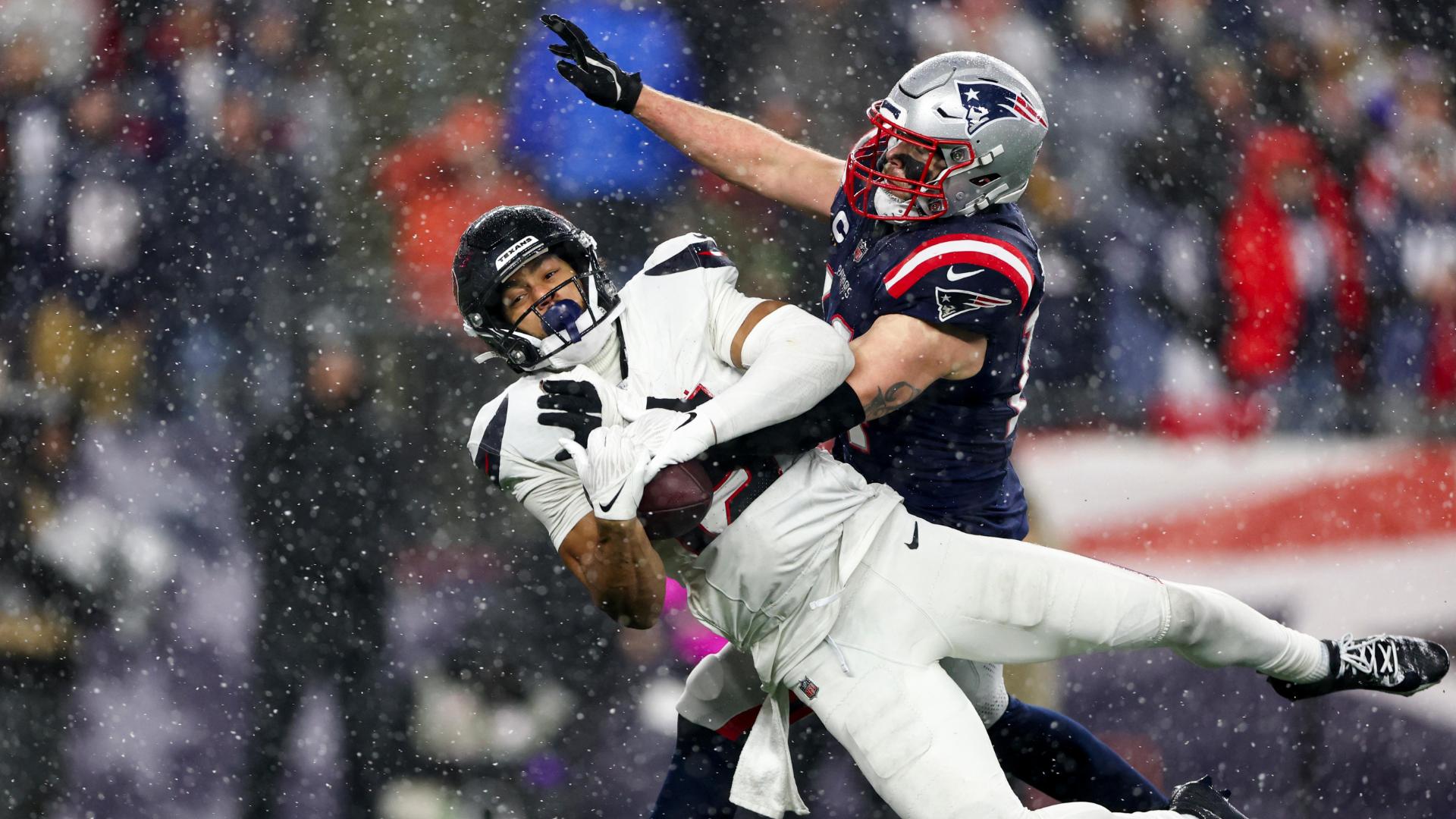
Receiving stats Houston Texans vs New England Patriots Match Player Stats provide some of the most interesting insights in a Houston Texans vs New England Patriots game. Targets, receptions, yards, and touchdowns only scratch the surface of how pass catchers influenced the matchup.
Patriots receivers often spread the production around. Instead of one receiver dominating the stat sheet, you’ll typically see several players finishing with similar reception totals. This balanced stat distribution makes the offense harder to defend and reflects a system built on reading coverage and exploiting mismatches.
Texans receivers, meanwhile, frequently produce more polarized stats. One or two receivers may account for a large share of targets and yards, especially in critical situations. This kind of stat line highlights trust between the quarterback and his primary playmakers, particularly on third downs or late in the game.
Tight ends also deserve special attention in this matchup. For the Patriots, tight end stats often show up in key moments, even if the total yardage isn’t massive. Short catches that move the chains or convert in the red zone may not look impressive on paper, but they are high-impact plays that show up in situational stats.
Defensive Standouts and Tackling Statistics
Defense often decides Texans vs Patriots games, and individual defensive stats help explain why. Tackles, sacks, quarterback pressures, and pass deflections all paint a picture of how disruptive each defense was.
Linebacker stats are especially revealing. High tackle numbers often indicate which players were constantly around the ball and involved in stopping the run or covering short passes. In these matchups, Patriots linebackers frequently post strong tackle totals due to their disciplined positioning and assignment-based defense.
For the Texans, defensive stats often highlight pass-rushing impact. Sack totals and quarterback hits show how effective the defensive line was at collapsing the pocket. Even if the sack numbers aren’t overwhelming, consistent pressure often leads to hurried throws, which don’t always show up directly in the stat sheet.
Secondary stats also matter. Passes defended and interceptions reveal how well defensive backs read the quarterback and closed passing lanes. A single interception in a key moment can swing momentum, making that stat far more important than it might appear at first glance.
Turnovers, Penalties, and Hidden Statistical Factors
Some of the most important player stats in a Texans vs Patriots matchup fall into what many fans consider “hidden” categories. Turnovers forced, penalties drawn, and even special teams tackles can quietly influence the final outcome.
Turnover-related stats often separate wins from losses. A quarterback interception or a forced fumble by a defensive player shows up clearly in the box score, but the impact goes beyond that one play. These stats usually correlate with short fields and easy scoring opportunities for the opposing offense.
Penalty-related stats are another underrated area. Offensive linemen allowing few penalties, or defensive backs drawing offensive pass interference calls, contribute significantly even if those stats don’t always get the spotlight. In disciplined teams like the Patriots, lower penalty counts often reflect strong coaching and situational awareness.
Special teams stats also deserve mention. Kick return yards, punt coverage tackles, and field goal accuracy may not dominate headlines, but they often decide close Texans vs Patriots games. A kicker’s perfect stat line or a returner’s ability to flip field position can quietly shape the entire contest.
Player Efficiency Metrics and Advanced Statistical Insights
Beyond traditional stats, efficiency metrics help explain how well players performed on a per-play basis. These numbers are especially useful when comparing Texans and Patriots players with different usage levels.
Quarterback efficiency metrics such as yards per attempt and passer rating reveal how productive each throw really was. A quarterback with fewer attempts but higher efficiency often played within the system and avoided costly mistakes, which is frequently reflected in Patriots quarterback stats.
For skill position players, stats like yards per touch and catch percentage offer deeper insight. A Texans receiver with fewer receptions but high yards per catch likely made the most of limited opportunities, stretching the defense vertically and creating scoring chances.
Defensive efficiency stats, such as missed tackle rates or pressure percentages, also matter. These metrics help explain why certain defenses appeared dominant even if the raw sack or interception numbers weren’t overwhelming. Efficiency often tells the true story behind the scoreboard.
Overall Player Stat Comparison and Game Impact
When all the Houston Texans vs New England Patriots match player stats are viewed together, a clearer narrative emerges. The Patriots’ stats often reflect balance, efficiency, and discipline across multiple players. The Texans’ stats, by contrast, frequently highlight explosive individual performances and aggressive playmaking.
Neither statistical profile is inherently better; they simply represent different football philosophies. Games between these teams often come down to which approach is executed more effectively on that particular day. Sometimes efficiency wins. Other times, explosive plays tilt the scales.
Ultimately, player stats give fans a deeper appreciation for the complexity of the game. They show how every player, not just the stars, contributes to the outcome. In Texans vs Patriots matchups, the stat sheet becomes a roadmap that explains not just what happened, but why it happened.
Final Thoughts
Breaking down Houston Texans vs New England Patriots match player stats goes far beyond counting yards and touchdowns. It’s about understanding roles, efficiency, and situational impact. From quarterbacks managing the game to defenders making timely stops, every stat tells a piece of the story.
For fans, analysts, and fantasy football players alike, these detailed stat insights turn a single game into a rich, analytical experience. And when two teams with such different identities clash, the numbers become even more fascinating.