
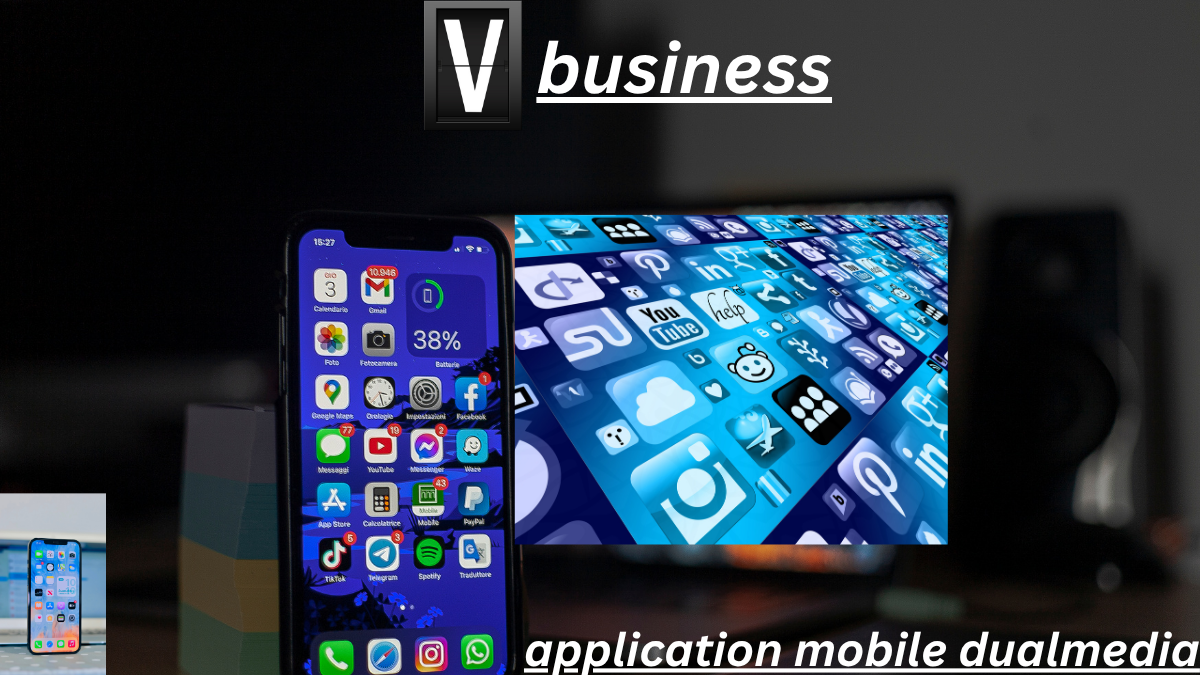
In an era dominated by rapid technological evolution, our digital consumption habits have shifted dramatically. Gone are the days when we were content with watching a single television screen or reading a static web page. Today, we are chronic multitaskers. We scroll through social media feeds while streaming a live sports match, or we monitor text-based news updates while listening to a video podcast. This cultural shift has given rise to a powerful new category in the app ecosystem: the application mobile dualmedia.
But what exactly is a dual-media setup? Why is it becoming a staple on smartphones globally? And how is it changing the landscape of mobile entertainment and productivity? This comprehensive guide dives deep into everything you need to know about modern multi-stream applications.
What is an Application Mobile DualMedia?
At its core, an application mobile dualmedia is software designed for smartphones and tablets that allows users to interact with, stream, or manage two distinct types of media simultaneously within a single user interface or across synchronized devices. Unlike traditional apps that force you to close one media source to open another, this approach bridges the gap perfectly.
This technical configuration typically manifests in three distinct ways:
Simultaneous Audio and Video Playback: Playing a background video or podcast while interacting with a separate visual canvas or live feed.
Dual-Screen Synchronization: Controlling media on a smart TV or PC monitor while using the mobile app as a secondary interactive dashboard.
Split-Screen Content Consumption: Seamlessly blending text-based media (like news articles or social feeds) with rich multimedia without interrupting the user experience.
Core Features of Dual-Media Mobile Platforms
To understand why a mobile dual-media application is gaining massive traction, we have to look under the hood. A successful platform isn’t just about throwing two elements on a screen at once; it requires clever engineering and an intuitive user interface (UI).
| Core Feature | Technical Implementation | User Benefit |
| Dynamic Audio Mixers | Advanced sound routing algorithms | Mute one source while listening to another, or split audio to Bluetooth. |
| Picture-in-Picture (PiP) | Floating windows & responsive overlays | Keep the video visible while browsing documents or chatting. |
| Real-Time Sync | Low-latency casting protocols | Perfect millisecond matching between phone and secondary displays. |
| Adaptive Bitrate | HLS or DASH streaming support | Prevents buffering even when loading two streams at once. |
Key Use Cases and Industry Applications
The applications of dual-media technology span multiple industries, from pure entertainment to high-level workplace productivity. Let’s look at where this technology is making the biggest waves.
Entertainment and Live Sports
Imagine watching a live football match on your phone. In a standard app, if you want to check player stats or live chat with other fans, you have to minimize the game. With an optimized application mobile dualmedia, the top half of your screen streams the live HD video, while the bottom half continuously updates with real-time statistics and social feeds.
Content Creation and Vlogging
For digital content creators, these tools are a game-changer. Apps in this category allow creators to record video from both the front and rear cameras simultaneously (dual-camera recording). This is incredibly popular for reaction videos and travel vlogging.
Mobile Learning and EdTech
Education has evolved beyond textbooks. Students using educational platforms can watch a video lecture on one part of their screen while simultaneously taking notes or viewing a PDF textbook on the other, significantly improving information retention.
Why Dual-Media Apps Represent the Future of Marketing
For digital marketers, app developers, and content publishers, the rise of dual-media mobile applications presents a massive opportunity. Traditional mobile apps struggle with high bounce rates; users open an app, look at a piece of content, and leave.
Dual-media apps fundamentally change user behavior by increasing dwell time. Because the app satisfies two needs at once—entertainment and information—users have very little reason to leave the platform, opening up richer ad placement opportunities and higher click-through rates (CTR).
Challenges in Dual-Media Development
While the benefits are obvious, building a flawless application mobile dualmedia requires careful optimization to overcome specific technical hurdles:
Battery Consumption: Processing two media streams simultaneously demands significant CPU and GPU power. Developers must utilize hardware acceleration to minimize this strain.
Bandwidth Usage: Streaming dual media requires robust internet speeds. Implementing smart caching and data saver modes is essential.
UI Congestion: If the user interface is poorly designed, the screen becomes cluttered. Designers must prioritize minimalist controls and intuitive swipe gestures.
Conclusion: The New Standard for Mobile Media
The concept of the dual-media mobile dualmedia is not just a passing trend; it is a direct response to how modern society interacts with technology. We are no longer passive consumers of content; we are active, multi-layered users who want to watch, read, analyze, and communicate all at the same time. As mobile processors become faster and 5G networks become the global standard, these applications will solidify their place as the future of digital productivity.


