

The Philadelphia 76ers vs Toronto Raptors Match Player Stats have faced off in some of the NBA’s most intense matchups over the years. Each clash between these two teams promises high energy, strategic gameplay, and standout performances from star players. In this article, we’ll dive deep into the player stats from their latest encounter, analyzing how individual performances shaped the outcome and what fans can take away from the matchup.
1. Philadelphia 76ers Player Performance Overview
The Philadelphia 76ers came into this game with high expectations, relying on their roster of experienced players to control the pace and dominate key positions. Joel Embiid, the team’s star center, once again proved why he’s one of the most feared players in the league. He contributed heavily in scoring, rebounds, and blocks, demonstrating both offensive prowess and defensive discipline. Embiid’s ability to command the paint not only boosts his personal stats but also opens opportunities for teammates to make plays.
Tyrese Maxey, known for his speed and sharpshooting, also made a noticeable impact. Maxey’s three-point shooting and quick drives to the basket kept the Raptors’ defense on edge. Beyond scoring, his assist numbers highlighted his role as a facilitator, making the 76ers’ offense more fluid and unpredictable.
Other key contributors included Tobias Harris and P.J. Tucker. Harris provided consistent scoring from mid-range and the perimeter, while Tucker’s veteran presence and defensive versatility allowed the 76ers to control crucial matchups. Bench players such as Shake Milton and De’Anthony Melton added depth, coming in with energy and supporting the starters with both points and defensive efforts. The combined stats of the team showcase a balanced attack, with multiple players stepping up at different points of the game.
2. Toronto Raptors Player Stats Analysis
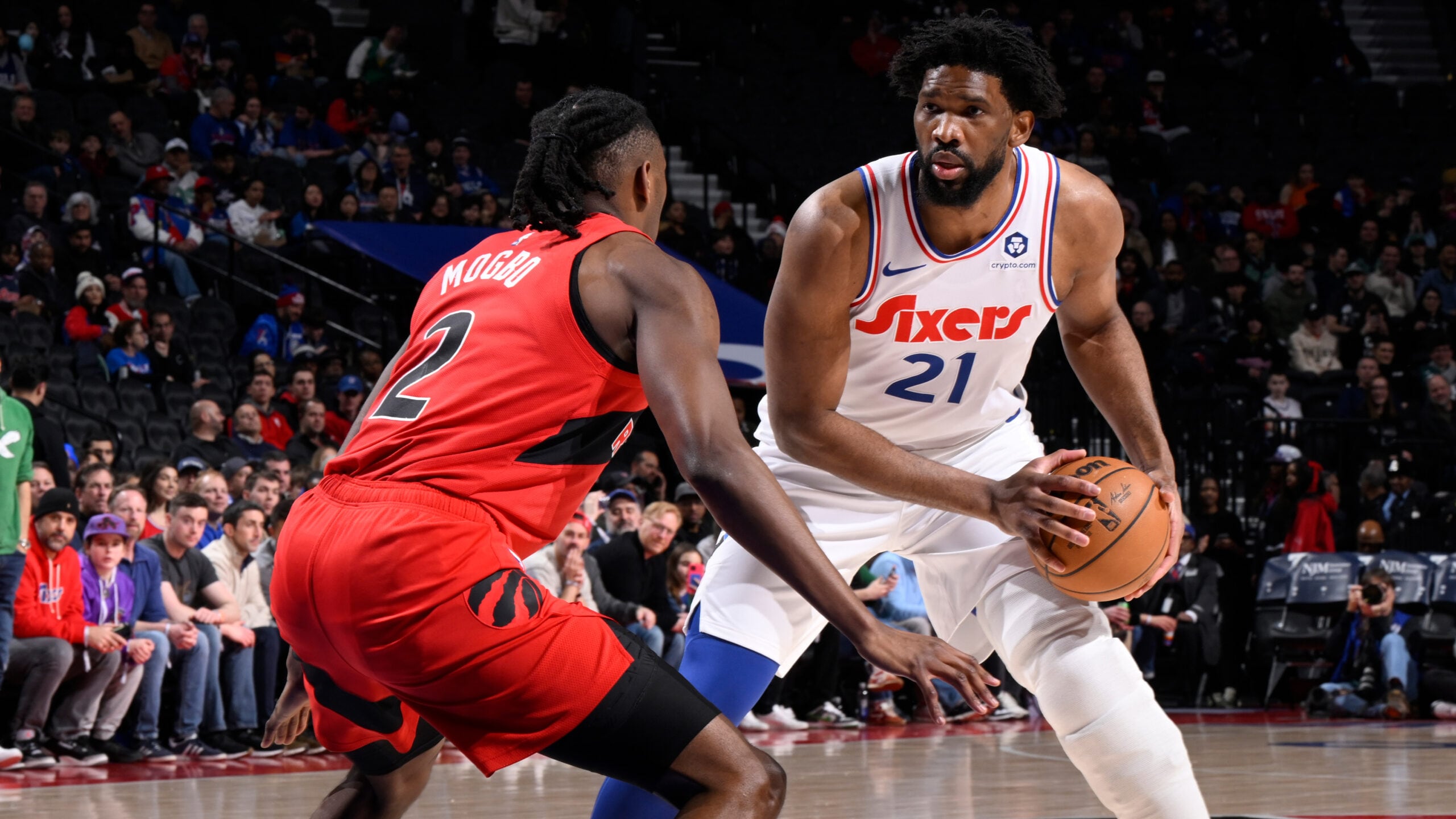
The 76ers vs Toronto Raptors Match Player Stats entered the matchup looking to challenge the 76ers’ dominance, leaning heavily on their young core and strategic shooting. Pascal Siakam, the Raptors’ versatile forward, once again stood out. Siakam contributed across multiple stat categories, scoring efficiently while also collecting rebounds and assists. His ability to stretch the floor with mid-range and three-point shots made him a constant threat.
Fred VanVleet also played a pivotal role, orchestrating the offense and penetrating defenses to create scoring opportunities. VanVleet’s performance in both scoring and assists demonstrated his value as a dual-threat guard capable of controlling the tempo of the game. Additionally, his defensive efforts against the 76ers’ perimeter players disrupted Philadelphia’s rhythm at key moments.
The Raptors’ bench, including OG Anunoby and Scottie Barnes, offered crucial minutes with solid scoring, hustle plays, and defensive pressure. Barnes, in particular, contributed both offensively and defensively, showcasing his athleticism and ability to impact the game without necessarily racking up huge numbers. The Raptors’ stats reflect a team effort, where even if the starters dominate, the bench contributes meaningfully to keep the game competitive.
3. Head-to-Head Statistical Comparison
When comparing the stats of the 76ers and Raptors in this matchup, a few trends become evident. The 76ers dominated in rebounding, particularly in the paint, thanks to Joel Embiid and the supporting cast. Their field goal percentages were consistent across starters, indicating efficient scoring and shot selection. Additionally, the 76ers’ assist-to-turnover ratio was favorable, showing disciplined ball movement and smart playmaking.
On the other hand, the Raptors excelled in perimeter shooting and fast-break opportunities. Their three-point percentage was higher than average, thanks to contributions from VanVleet, Siakam, and Anunoby. This kept the game close, despite the 76ers’ dominance inside. Defensive stats such as steals and blocks were also notable for Toronto, illustrating their ability to challenge Philadelphia’s offensive schemes.
Turnovers and fouls played a significant role in the outcome. The 76ers maintained composure with fewer turnovers, while the Raptors occasionally struggled with ball control in high-pressure situations. The comparison clearly highlights the contrasting styles: Philadelphia relies on inside scoring and size advantage, while Toronto focuses on agility, speed, and perimeter efficiency.
4. Notable Individual Performances
One of the highlights of the 76ers vs Raptors matchup was the standout individual performances. Joel Embiid had a near-dominant game, with double-digit points, double-digit rebounds, and multiple blocks. His efficiency in the post and mid-range shots made him virtually unstoppable at key stretches. Tyrese Maxey also impressed with his scoring bursts, including critical three-pointers in clutch moments that kept Philadelphia ahead.
For the Raptors, Pascal Siakam’s versatile stat line stood out. Not only did he score efficiently, but he also contributed in rebounds and assists, demonstrating leadership on the court. Fred VanVleet’s ability to create plays under pressure and his clutch shooting made him a central figure in keeping Toronto competitive. OG Anunoby chipped in defensively, adding steals and contesting shots that frustrated the 76ers’ shooters.
These performances highlight how basketball is both a team sport and a platform for individual excellence. Even when the team’s final outcome may lean one way, the stats reveal moments of brilliance from players on both sides, showing the depth and talent in the NBA.
5. Impact on Season and Future Matchups
Analyzing the player stats from this game offers insights into how both teams might adjust in future encounters. The 76ers’ reliance on Embiid’s dominance suggests that maintaining his health and efficiency will be key to winning tight games. The bench contributions also hint at the team’s ability to rotate players without significant drop-offs in performance.
For the Raptors, the game reinforces the importance of perimeter shooting and defensive versatility. Players like Siakam and VanVleet can lead the team in scoring and playmaking, but bench depth and consistent ball control will be critical in future matchups against top-tier teams like Philadelphia.
These stats don’t just reflect a single game; they also provide a roadmap for coaching strategies, player development, and game planning. Analysts and fans alike can use these numbers to predict trends, highlight strengths, and identify weaknesses for the remainder of the season.
Conclusion
The 76ers vs Toronto Raptors matchup delivered high-level basketball, showcasing the strengths and strategies of two talented NBA teams. Through detailed player stats, we can see how individual performances like Joel Embiid’s dominance and Pascal Siakam’s versatility influenced the game. Both teams displayed unique approaches—Philadelphia relying on inside presence and structured playmaking, and Toronto leveraging speed, perimeter shooting, and defensive hustle.
For fans and analysts, examining these stats is more than just numbers; it’s about understanding the flow of the game, player impact, and the dynamics that make NBA basketball so exciting. As the season progresses, matchups like this serve as benchmarks, highlighting how star players, supporting cast, and team strategies all come together to create thrilling, competitive basketball.